Kilometres and receipts for rideshare, kept in one place
A driver's records come in two halves: the kilometres and the receipts. HeyJerni keeps both.
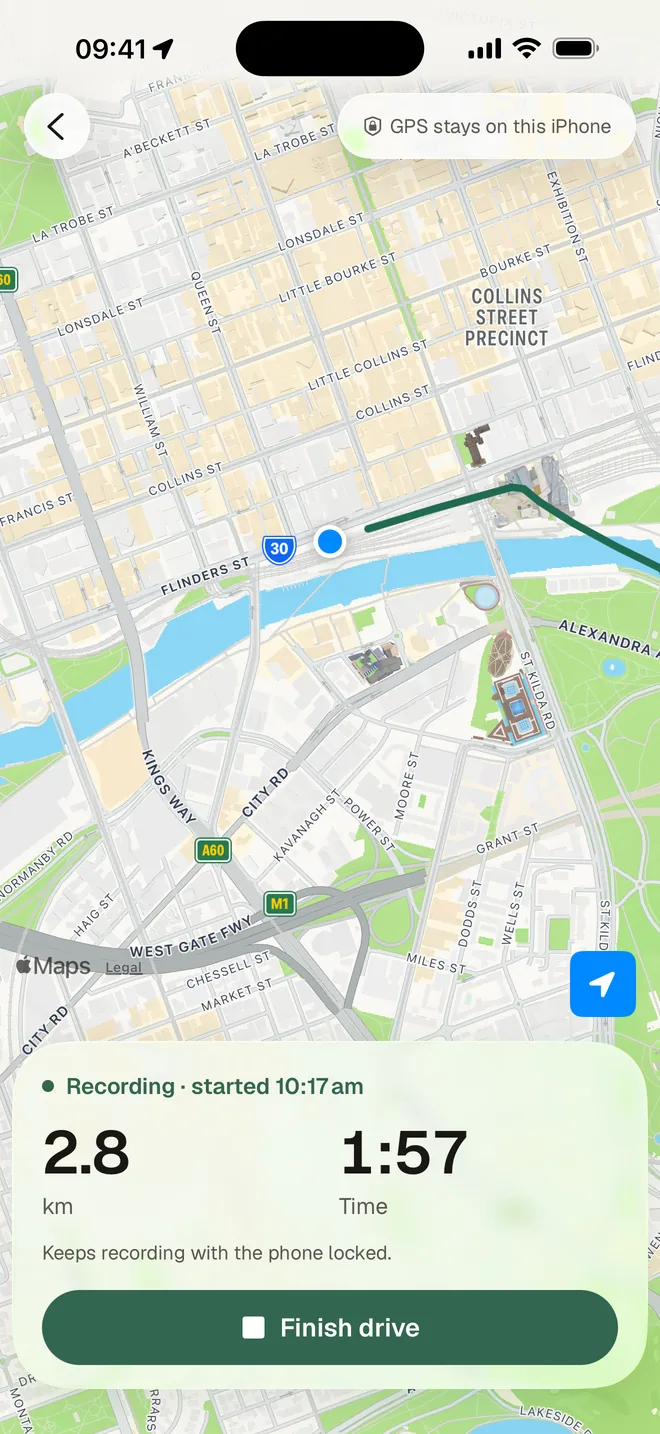
Add your car, choose cents per kilometre or the logbook method, and tap Record a drive at the start of a shift; the route and distance are recorded by GPS and stay on your iPhone. The fuel, servicing and tolls sit beside the car, captured in seconds at the servo instead of shoved into the console. One thing it does not do is GST or BAS, which rideshare driving generally needs, so that still belongs with accounting software or an agent.
Where driver records fall apart
- Fuel receipts live and die in the car. Thermal paper on a dashboard in summer is blank within months, and the servo does not keep a copy for you.
- Small running costs never get recorded. Car washes, water and mints for passengers, a new phone mount, a dash cam, a windscreen replacement.
- The phone bill is the biggest mixed expense you have. Almost entirely work while you are driving, and personal the rest of the time, which means a percentage and a basis for it.
- Two systems that never meet. Kilometres get tracked in one app and receipts pile up somewhere else, and at year end nobody can match them. Or the kilometres never get recorded at all.
How HeyJerni fits a driving shift
Record the shift as a drive
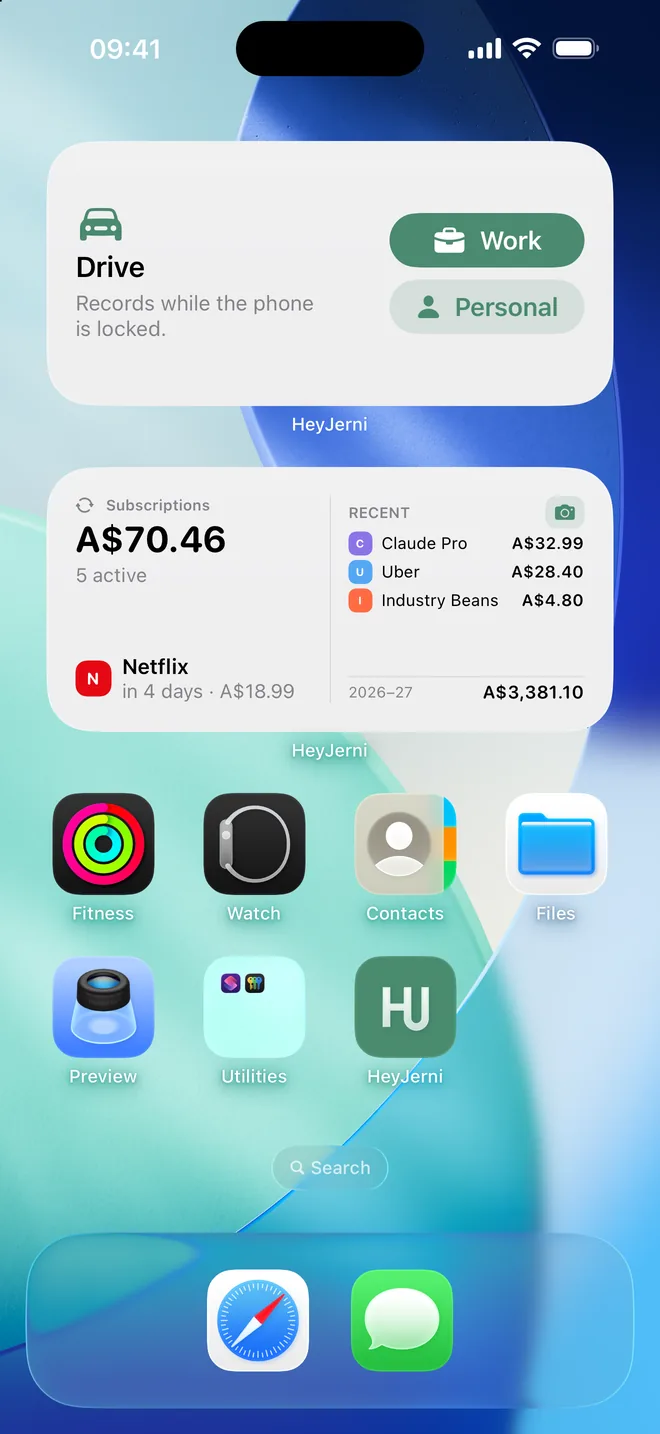
Tap Record a drive and mark it Work, Personal or Decide later. The route draws as you go, and it keeps recording with the phone locked, and usually even if the app is swiped away. An optional Shortcuts automation can start and end drives when CarPlay or Bluetooth connects.
Scan at the pump
Photograph the receipt before you pull out. On-device AI reads the supplier, amount and date, so it takes about as long as putting the cap back on.
Let tap-to-pay purchases log themselves
A one-time Shortcuts automation records every tap-to-pay purchase with the merchant and amount. Fuel, tolls, the car wash and the coffee stop all arrive by themselves.
Say the small ones
Between rides, tap + then Say it and say several at once: "car wash twelve dollars, parking eight". Each becomes a draft to check. English, Cantonese or Mandarin, processed on the phone; needs iOS 26.
Set the work-use share once
Phone, internet, anything used off shift as well. Set a percentage with a basis you can explain, and HeyJerni remembers the supplier.
Hand over one pack
The Accountant Pack for the financial year includes the expense summary, the receipt images, a logbook CSV of every trip, and each car's claim in the PDF.
Receipts drivers commonly need to keep
Common expenses a rideshare driver keeps records for. Car expenses are usually claimed through the logbook method or cents per kilometre, and the method decides which of these receipts you need: cents per kilometre uses the published ATO rate up to 5,000 business kilometres and needs no car receipts, while the logbook method claims the business-use share of actual car costs. Driving from home to a usual workplace is generally private, so check how the ATO treats the start of a shift. Whether an expense is deductible for you, and what your GST position is, depends on your circumstances; check the ATO ride-sourcing guidance or ask a registered tax agent.
- Fuel, servicing, tyres and repairs, which the logbook method still needs receipts for
- Registration, insurance and roadside assistance
- Car washes and interior cleaning
- Tolls and parking while driving for the platform
- Phone and internet, the work-use share
- Mounts, chargers, dash cams and other in-car equipment
- Water, mints and other amenities provided to passengers
- Platform fees and commissions, and any licence or accreditation costs
A two-minute routine between shifts
- 1Open Records and tap Unreviewed.
- 2Confirm the category and work use on the week's purchases. Fuel and tolls are usually one tap after the first time.
- 3Scan anything still in the console or the glovebox.
- 4Mark any trips left on Decide later as Work or Personal.
- 5At 30 June, run Record Check and send the Accountant Pack, logbook included.
What HeyJerni does not do
- GST and BAS. Ride-sourcing drivers generally have to register for GST regardless of turnover, and that needs accounting software or an agent.
- Income from the platform, statements or reconciliation.
- Bank linking. By design; the records stay on the phone.
Frequently asked questions
Can HeyJerni track my kilometres?
Logbook method or cents per kilometre?
Do I still need receipts with cents per kilometre?
Can it remind me about rego and insurance?
Does it handle GST or my BAS?
Does it work with no signal?
Can I separate driving expenses from personal ones?
Is this tax advice?
Keep reading
Australian references
Last reviewed: September 2026. Tax information on this page is based on publicly available Australian Taxation Office guidance. HeyJerni is a record-keeping tool and does not provide tax or financial advice.

Start with the next shift
Download HeyJerni, add your car, and record the next shift as a drive. Then scan what is already in the console; supplier, amount and date fill themselves in.
